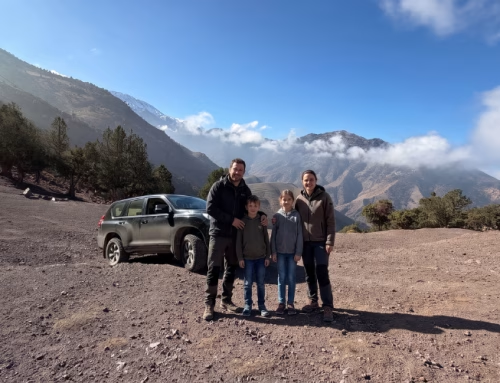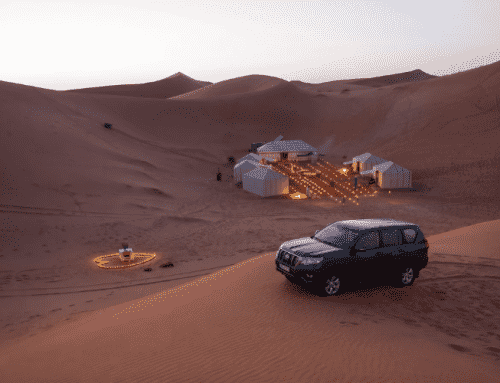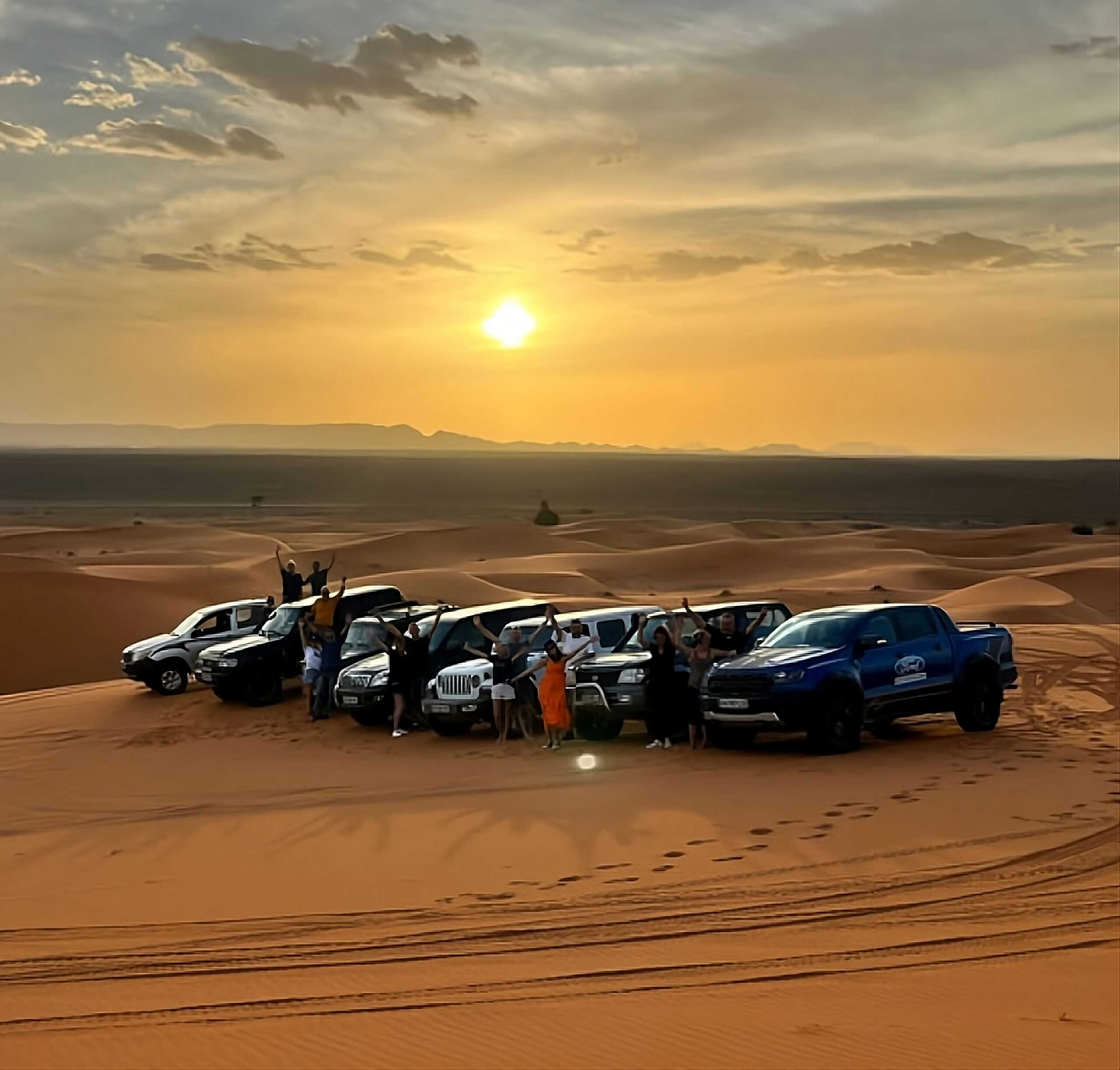
A 4x4 slicing through golden dunes at sunset isn't just a marketing image — it's the most honest invitation Morocco can extend to a traveler. In just a few days, you can cross the dizzying passes of the High Atlas, descend into the infinite stretches of the Sahara, stop at a centuries-old palm grove, and finish the day bivouacking under a Milky Way few places on Earth still offer.
But a 4x4 raid in Morocco isn't something you improvise. Between vehicle choice, itinerary, budget, format (self-drive or guided), technical preparation, and respect for local culture, there are a dozen decisions to make before you even touch the first track. This guide covers them all, with the operational answers of an agency that sees vehicles on these tracks every week.
Why Choose Morocco for a 4x4 Raid
Few countries in the world concentrate so much diversity within such accessible borders. In a single week, you can drive the switchbacks of the Tizi n'Tichka pass at 2,260 meters, dive into the canyons of the Dadès Gorges, tackle the sand waves of the Erg Chegaga, watch sunrise over the Erg Chebbi dunes, and finish on the Atlantic coast between cliffs and ocean. No other 4x4 destination offers this scenic variety at this scale of distances.
Beyond the landscapes, it's a human adventure. The tracks inevitably lead to isolated Berber villages, centuries-old kasbahs, and nomadic camps. Moroccan hospitality — a shared mint tea, an unexpected conversation, a meal in a family home — transforms a trip into an experience. For the best time of year, our guide on the ideal season shows October to March as the prime window.
Logistical accessibility is the final asset. Marrakech has an international airport, daily connections from Europe, and solid road infrastructure right up to the desert's edge. Paperwork is minimal: for European, Canadian, American, Australian, and British citizens, a passport is enough to enter the country, and your national driving license is valid for one year. No visa, no carnet de passage. Administratively, Morocco is one of the simplest 4x4 destinations in the world.
Self-Drive or Organized Raid: Which Format Is Right for You?
Before any itinerary, the structuring question: do you drive solo, or within a guided expedition? Both formats are valid, but they appeal to different traveler profiles.
Self-Drive: Total Freedom, Serious Preparation
Renting a 4x4 and driving it yourself is the maximum-freedom option. You set your own itinerary, your rhythm, your stops. You can turn onto a track that catches your eye, stretch out a stage, improvise an encounter. It's the option we recommend for experienced travelers who want to leave the beaten path.
What it demands in return: solid knowledge of basic 4x4 mechanics, mastery of navigation tools (GPS with offline tracks, paper maps as backup), anticipation of supplies (water, fuel, food in isolated areas), and solid off-road driving technique. An off-road driving course before a first raid is an excellent investment.
Organized Raid: Peace of Mind and Expertise
Going with an agency that handles everything — itinerary, logistics, accommodation, lead vehicle, mechanical assistance — offers peace of mind that self-drive simply cannot match. Ideal for a first experience, for a group of friends who want to enjoy without managing logistics, or for travelers who prefer to focus on discovery rather than planning.
The trade-off: less daily flexibility, a rhythm imposed by the group, and a budget generally 30 to 50% higher than an equivalent self-drive.
Specific Formats: Rally Raid and Themed Expeditions
Beyond the classic two options, more specialized formats exist. The rally raid — like the famous Rallye Aïcha des Gazelles — adds a dimension of competition and GPS-free navigation for seasoned drivers. Other raids are themed: photography, desert astronomy, humanitarian missions, wellness retreats. These formats let you combine the 4x4 experience with a complementary passion.
The Essential Itineraries of a Moroccan Raid
Morocco is full of legendary tracks. Here are the routes that forge the memories of a successful raid, organized by type of experience.
The Classics of the Great South: Golden Dunes and Infinite Ergs
This is the postcard image of a 4x4 raid in Morocco, and for good reason. The road south inevitably leads to the country's two great ergs.
Erg Chebbi (Merzouga) is the most accessible, famous for its 150-meter orange-tinted dunes and well-developed tourist infrastructure. Ideal for a first Saharan immersion, especially if you're short on time. Our complete itineraries around Merzouga detail the four routes we recommend locally.
Erg Chegaga is wilder, vaster, more isolated. Reaching it requires 60 kilometers of 4x4 track from Mhamid, a real navigational and driving effort. The reward: 40 kilometers of uninterrupted dunes, almost nobody around, and a bivouac under the stars in complete silence. We've detailed the complete 5-day Marrakech → Chegaga itinerary.
The Atlas and Its Deep Valleys: Between Mountains and Oases
The High Atlas is an exceptional playground for mountain-track enthusiasts. Crossing the Tizi n'Tichka pass is an experience in itself, but the real adventure begins when you leave the asphalt. The tracks connecting the Dadès valley to Todra, or venturing into the M'Goun massif, offer spectacular panoramas and stimulating driving challenges.
The Marrakech → Ouarzazate route via the Kasbahs is the ideal introduction to this terrain: it combines the mythical Tizi n'Tichka pass, the UNESCO kasbah of Aït Ben Haddou, and the historic Ounila valley track that only 4x4s can tackle.
The Less-Traveled Tracks: Anti-Atlas and Wild Coasts
For those seeking to escape the classic circuits, two regions deserve a detour. The Djebel Sarho massif, with its volcanic landscapes and twisted rock formations, offers technical and lightly-traveled tracks. Further south, the White Beach (Plage Blanche) allows you to drive for kilometers on deserted beaches between cliffs and ocean — a unique and memorable driving experience.
Customizing Your Raid: Duration and Themes
The beauty of Morocco lies in being able to build a tailored route around available time:
- Long weekend (3 days): short loop around Marrakech including the Atlas and Agafay
- One week (6-7 days): serious desert incursion, Merzouga or Chegaga
- 10-15 days: grand tour combining Atlas, desert, and Atlantic coast
You can also theme the trip: kasbah discovery, nomadic encounters, prehistoric rock-art sites, or regional gastronomic tasting.
Essential Preparation: Vehicle and Driver
A successful adventure is a well-prepared adventure. Equipment reliability and personal preparation are the two pillars of safety and enjoyment.
Vehicle Choice: Ruggedness Before Power
Vehicle choice is decisive, and it depends on your travel profile. Our detailed comparison of 5 proven 4x4 models for the Moroccan desert breaks down the profile-vehicle matching, but in summary:
- Suzuki Jimny: light, agile, perfect for a duo focused on the Atlas
- Jeep Wrangler: iconic workhorse for intense short-duration raids
- Toyota Hilux: the standard for organized raids, versatile and robust
- Toyota Land Cruiser Prado TX Turbo: our default recommendation, best comfort/capability ratio
- Ford Ranger Raptor 2026: dune-eating machine for confirmed drivers
Before any departure, the vehicle must undergo a complete service: suspension, tires (mixed or mud-terrain profile), filtration, fluid levels, chassis inspection. For self-drive raids, carry basic spare parts (filters, belts) and appropriate tools.
Mastering Moroccan Off-Road Driving
Moroccan off-road driving demands humility and adaptation. Three main surfaces:
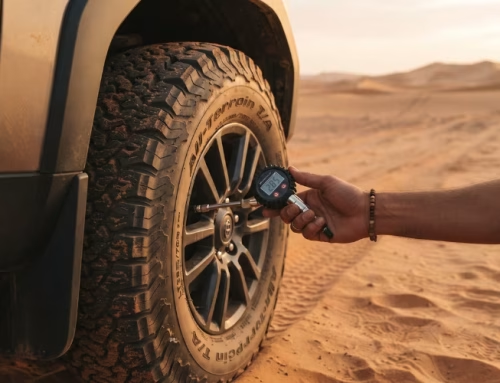
Rocky tracks (regs): speed management to preserve tires and suspension. The tire pressure to adopt is 1.8 to 2.2 bar (26-32 psi).
Sand (ergs): low pressure (1.0 to 1.3 bar / 15-19 psi), constant speed, wide trajectories. Above 50 km/h on heavily-deflated tires, the risk of debeading becomes real.
Dune crossings: specific technique, a mix of firm acceleration going up and controlled braking coming down. The classic beginner's mistake: hesitating at the crest of a ridge = guaranteed stuck.
A 12V compressor to re-inflate tires at the end of the track is non-negotiable — it comes included with every vehicle in our fleet.
Personal Equipment: Autonomy and Safety
Pack for extreme temperature variations: warm clothing for cool desert nights (3-5 °C / 37-41 °F in December) or at altitude, light clothing for daytime (25-30 °C / 77-86 °F during October days). A complete first-aid kit. Sufficient water reserves — count 4 to 5 liters per person per day, plus 30 liters of reserve per vehicle for isolated tracks. For a self-drive in isolated areas, satellite communication (phone or distress beacon) is strongly recommended.
4x4 Raid Budget in Morocco: Anticipate to Avoid Surprises
The cost of a 4x4 raid can vary significantly depending on expedition type, season, vehicle, and comfort level chosen. Here are the expense categories to anticipate.
Key Budget Items
- Vehicle rental : The main expense. Count €60 to €90/day for a compact 4x4 (Jimny) in low season, up to €280-380/day for a premium 4x4 (Ranger Raptor) in high season. Check what's included: unlimited mileage, comprehensive insurance, roadside assistance, embedded off-road equipment.
- Fuel : Often underestimated. A Marrakech → Chegaga → return raid (approximately 1,100 km / 685 miles) burns €100 to €150 in fuel depending on the vehicle, more on tracks due to increased consumption in rough conditions.
- Accommodation : Highly variable. From a few euros for camping to over €150 for a charming riad or a luxury desert camp. A good middle ground is around €60-100 per night in mid-range.
- Food : Meals in local guesthouses and small restaurants cost €10-20 per person. Major hotels and tourist riads easily reach €40-60 per meal.
- Contingencies and extras : Set aside 10-15% of total budget for unforeseen expenses (puncture, extra night, itinerary extension). For a complete breakdown of all costs and hidden fees to avoid, our budget guide covers every expense item.
Realistic Budget Example
For a 7-day couple's raid, Marrakech → Chegaga → return, in a Toyota Land Cruiser Prado, high season:
- 7-day rental × €180 = €1,260
- Fuel (~1,100 km) : €120
- Accommodation and bivouacs (6 nights) : €360-600
- Meals and extras (2 people) : €200-350
- Realistic total: €1,940 to €2,330 for two people
In a Suzuki Jimny with simple accommodation, the same raid comes to €1,200-1,500. In a Ford Ranger Raptor with premium bivouacs, count €2,800-3,500.
Tips to Optimize Your Budget
Favor desert-edge bivouacs over premium camps — the stargazing experience is the same and you save €300-500 on a full raid. Shop at local souks rather than eating in restaurants systematically. Travel outside European school holiday peaks. Pay in cash or by Swift transfer to avoid the 4% commission on card payments.
Cultural Immersion: A Raid, a Country
A 4x4 raid in Morocco is a unique gateway to the country's beating heart. The adventure takes on its full meaning when it's accompanied by a real connection with people and traditions.
Authentic Encounters and Local Respect
Immersion is a matter of respect. A few words of Arabic or Berber open doors. Asking permission before photographing someone is a golden rule. Dressing modestly when approaching villages is appreciated. Accepting the offered mint tea is a fundamental gesture of hospitality — refusing it can be seen as a slight.
These small attentions turn chance encounters into lasting memories. In southern Morocco, being invited to drink tea in a Berber home is an experience few tourist guides promise and that only respectful travelers earn.
Gastronomy: A Journey Within the Journey
Culinary discovery is an integral part of the raid. A tagine cooked over a wood fire in a mountain guesthouse, a family couscous, a medfouna (the "Berber pizza" of the desert) baked under ashes, Berber bread fresh from a stone oven — each region has its flavors. Stopover towns like Zagora, Ouarzazate, or Boumalne Dadès all offer authentic local addresses, often under €15 per meal.
Festivals and Events to Catch
If your raid falls during certain periods, you can experience unique moments: the Rose Festival in El Kelâa M'Gouna in May, the Tan-Tan moussems (local festivals) in summer, the traditional Berber weddings of Imilchil in September. A little upfront research lets you align your itinerary with a notable cultural event.
Why Rent With 4x4 Off Road Marrakech
We've been renting 4x4s for the Moroccan desert for over ten years. Here's what structures our service, concretely.
- A fleet dedicated to raids, not a general rental fleet : Each vehicle — Jimny, Hilux, Wrangler, Prado TX Turbo, Ranger Raptor — is prepared specifically for off-road use. Adapted tires, verified suspension, up-to-date maintenance before each rental.
- Off-road equipment included in the rental : 12V compressor (essential for adjusting tire pressure on tracks), sand recovery tracks, GPS with pre-loaded tracks, cooler. It's included, not charged as an extra.
- A terrain briefing before every departure : Our teams systematically review the planned itinerary, current track conditions, seasonal watch points, and useful emergency contacts. It's a service included.
- WhatsApp support throughout the rental : A technical doubt, a question about a track, an unexpected problem — we remain directly reachable throughout the raid.
- Transparent rental terms : Our full conditions are public: deposit of €1,000 to €3,000 depending on category, vehicle insurance (excluding tires), unlimited mileage included, airport/hotel/station delivery with no surcharge in Marrakech. No hidden fees at the counter.