In October, the track between Ouarzazate and Merzouga is a ribbon of compact earth, edged with golden light. The engine runs without straining, the air is dry, temperatures hover between 22 and 28°C. Two months later, that same track under the August sun becomes an open-air oven: 48°C at ground level, the sand burns through your soles, and the engine temperature gauge climbs a little too fast for your liking.
In Morocco, the season doesn't just change comfort — it changes the type of track that's passable, the vehicle's behaviour, the mechanical risks, and even the rental rates. We've been sending 4x4s onto this terrain every week for years. Here's what the terrain has taught us.
Morocco by 4x4, Month by Month: What the Terrain Really Says
October → February: the ideal window
This is the benchmark season for any 4x4 road trip in Morocco, and that's no accident. Daytime temperatures in the south are around 20–28°C, the nights are cool without being freezing (except at altitude), and above all, the tracks are in their best condition: dry, compact, predictable.
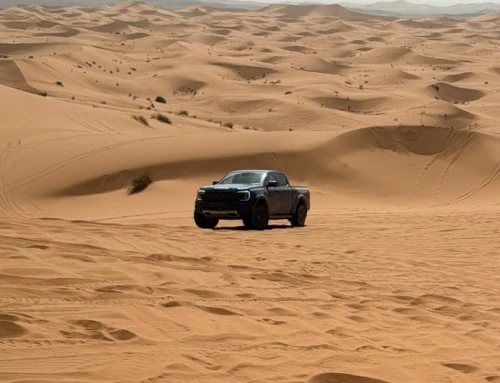
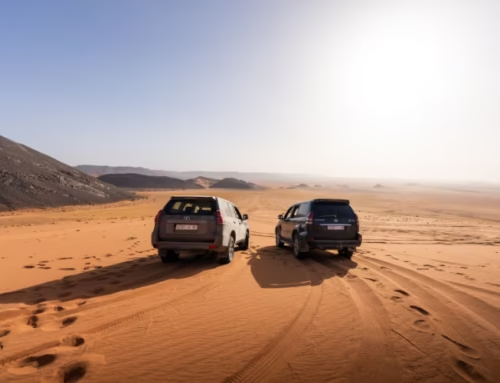
October–November is the sweet spot for the Sahara. Summer has just let go, the sand is no longer scorching, and the low-angled light turns every dune into a spectacle. It's the period when we send the most vehicles toward Merzouga and Erg Chebbi — driving conditions there are optimal.
In December–January, the air cools off seriously. In the Sahara, the days stay pleasant (18–22°C), but the nights drop to 3–5°C. Pack layers for the bivouac. In the High Atlas, it's a different story: the passes above 2,000 m can be snowy or frozen in the morning. The Tizi n'Tichka remains passable, but the secondary high-altitude tracks effectively close.
February marks the gradual return of milder weather. In the Anti-Atlas, the almond trees blossom and temperatures rise again. It's an underrated window, with fewer people on the tracks than in October and rental rates that are often lower.
Field verdict: the mid-October to mid-December period is our systematic recommendation for a first road trip. All regions of the country are accessible, conditions are readable, and the risk is minimal.
March → May: the tricky spring
March can offer magnificent days. But it's also the season of spring rains, and that's when Morocco becomes unpredictable for an off-road vehicle.
The problem is the wadis. A wadi can be perfectly dry at 8 a.m. and impassable by 10 a.m. if a downpour falls 50 km upstream. The water comes down fast, without warning. Every spring, we see 4x4s stuck — not because the driver drove badly, but because they didn't understand how flash floods work in southern Morocco.
In April–May, the heat returns quickly in the Sahara. From mid-April, Merzouga regularly exceeds 35°C and the deep-sand tracks become punishing for the mechanics again.
On the other hand, the High Atlas is superb in spring. The passes clear of snow, the valleys turn green, and the tracks around Marrakech are in excellent condition.
Field verdict: passable with experience and a good knowledge of local conditions. Not ideal for a first 4x4 road trip in Morocco, especially if your itinerary includes the Sahara.
June → September: the Saharan summer
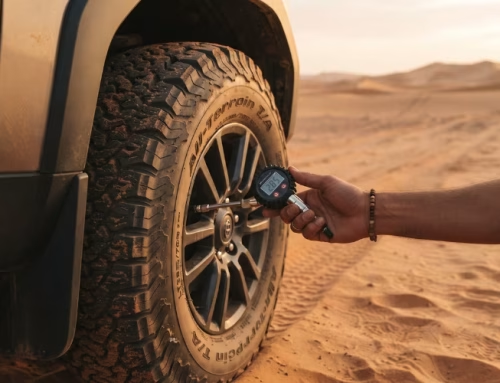
Let's be direct: the Moroccan desert in summer is virtually impassable by 4x4. Ground temperatures exceed 50°C, the sand becomes a mechanical adversary (tyres deflated for the sand heat up even faster), and the distances between water or assistance points make any breakdown potentially dangerous.
The risk isn't theoretical. In summer, we don't recommend any itinerary south of the Ouarzazate–Errachidia line without professional support and a backup vehicle.
What remains doable: the High Atlas between June and early August stays passable, the passes are clear, and temperatures at altitude remain bearable (25–30°C during the day). The Agafay Desert, 30 minutes from Marrakech, can be crossed in 2–3 hours and remains accessible early in the morning.
The hidden advantage: it's the low season for rates. If you're only aiming for an Atlas circuit or a short raid around Marrakech, rental prices are noticeably lower between June and September.
Field verdict: reserved for high-altitude or short-duration circuits, and for experienced drivers who know how to adapt their driving to extreme conditions.
June → September: the Saharan summer
Let's be direct: the Moroccan desert in summer is virtually impassable by 4x4. Ground temperatures exceed 50°C, the sand becomes a mechanical adversary (tyres deflated for the sand heat up even faster), and the distances between water or assistance points make any breakdown potentially dangerous.
The risk isn't theoretical. In summer, we don't recommend any itinerary south of the Ouarzazate–Errachidia line without professional support and a backup vehicle.
What remains doable: the High Atlas between June and early August stays passable, the passes are clear, and temperatures at altitude remain bearable (25–30°C during the day). The Agafay Desert, 30 minutes from Marrakech, can be crossed in 2–3 hours and remains accessible early in the morning.
The hidden advantage: it's the low season for rates. If you're only aiming for an Atlas circuit or a short raid around Marrakech, rental prices are noticeably lower between June and September.
Field verdict: reserved for high-altitude or short-duration circuits, and for experienced drivers who know how to adapt their driving to extreme conditions.
Which Season for Your Itinerary
There's no universal best season — there's the right season for the right area. Here's how it breaks down concretely:
Sahara — Erg Chebbi, Merzouga, Erg Chegaga: October to February exclusively. Outside this window, the heat makes long Saharan itineraries risky, even impassable.
High Atlas — passes, high-altitude tracks: May to October. In winter, the main passes (Tizi n'Tichka) stay open, but the secondary tracks above 2,500 m are often snowy or muddy.
Anti-Atlas and Atlantic coast: passable almost all year round. Spring (February–April) is the most pleasant season — mild temperatures, vegetation in bloom, no track constraints.
Agafay and the outskirts of Marrakech: all year round, avoiding the months of July–August in the middle of the day. The short circuits around Marrakech work very well early in the morning, even in summer.
The ideal for a complete 4x4 raid combining Atlas and Sahara? October or November, without hesitation.
5 Field Tips for Choosing Your Period
Book early for high season. Between October and December, demand for desert-equipped 4x4s skyrockets. Two months in advance is a minimum to have your choice of vehicle.
Anticipate the day/night swings. In December in the Sahara, it can be 28°C at noon and 4°C at 5 a.m. If you camp, bring a suitable sleeping bag and warm clothing, even in the desert.
Check the state of the tracks before setting off. Google Maps doesn't know the real condition of a Moroccan track. Our teams update conditions regularly — contact us before finalising your itinerary, especially in spring.
Allow a day of margin in spring. If you're driving between March and May, a buffer day in your schedule can save your trip in case of an impassable wadi or a cut-off track.
A well-prepared 4x4 counts more than the "perfect" season. The best month of the year will never make up for a poorly maintained or under-equipped vehicle. Suitable tyres, a reliable cooling system, recovery boards — that's what makes the difference between an adventure and a misadventure. Discover what a good desert 4x4 really involves.